Friday, August 18, 2006
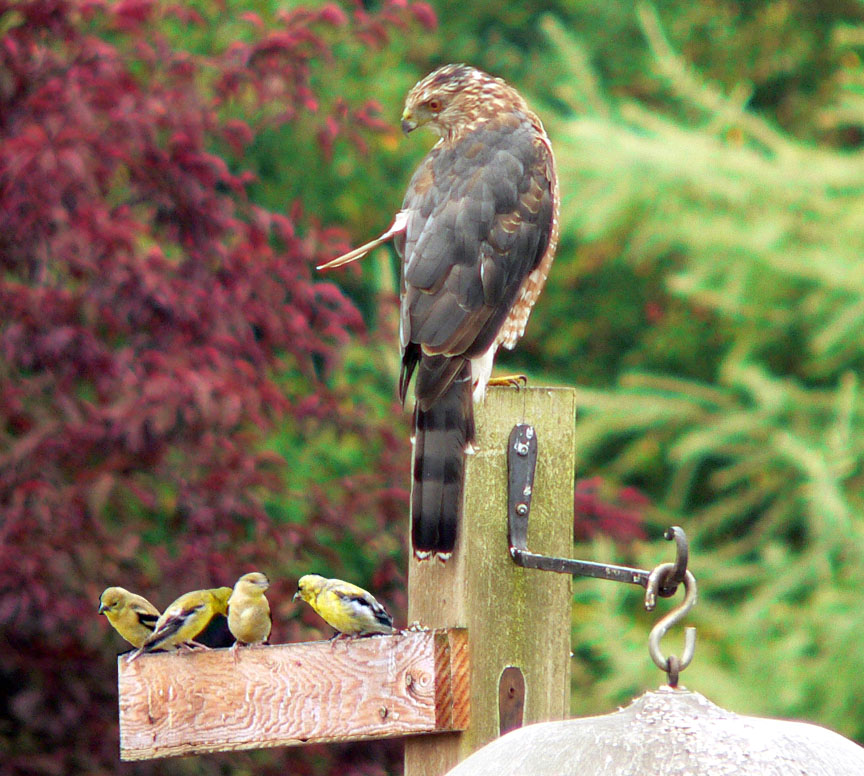
When Hawks Dream
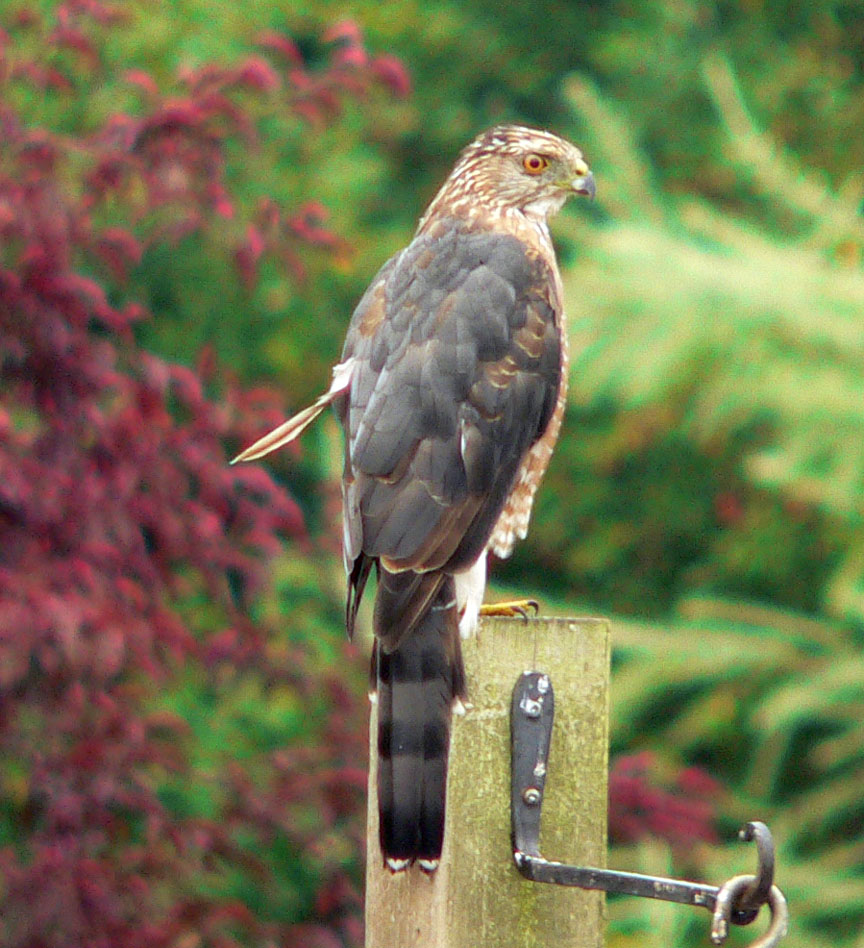
Reality notes: I photoshopped in these finches from one of Roger's photos. I was delighted with virtually providing this juvenile Cooper's Hawk a dream of abundance. It is too bad we must use the hawk as a metaphor for those among us who make war. These fierce raptors get a bad rap. They have a place in our yard as surely as the dove. The finch photo was taken Wednesday afternoon. Hawk photos were taken Thursday morning. (Click to enlarge.)
We're thinking about doing a post on Saturday and sharing photos that our friends without blogs have emailed to us. If you would like to send us a digital photo to be part of this post, please send it to newdharmabums at yahoo dot com. We know there are so many wonderful photographers out there who see things we will never see, so please send us your favorites. We also know this is short notice, but what the heck, we're spontaneous sometimes.
UPDATE: The kind of photos we're looking for are the ones that moved you-- they can be birds, flowers, landscapes, insects. Anything beautiful that you'd like to share.
If our Saturday post doesn't happen, we'll just wish you a fine weekend now. Peace.
Thursday, August 17, 2006
for the birds
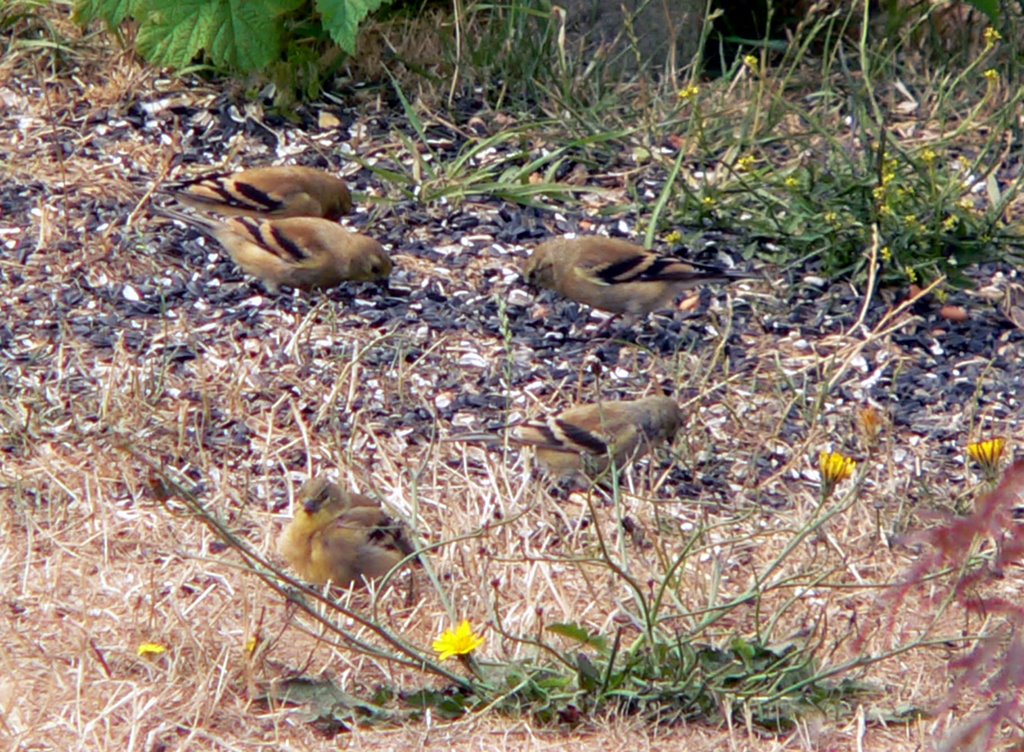
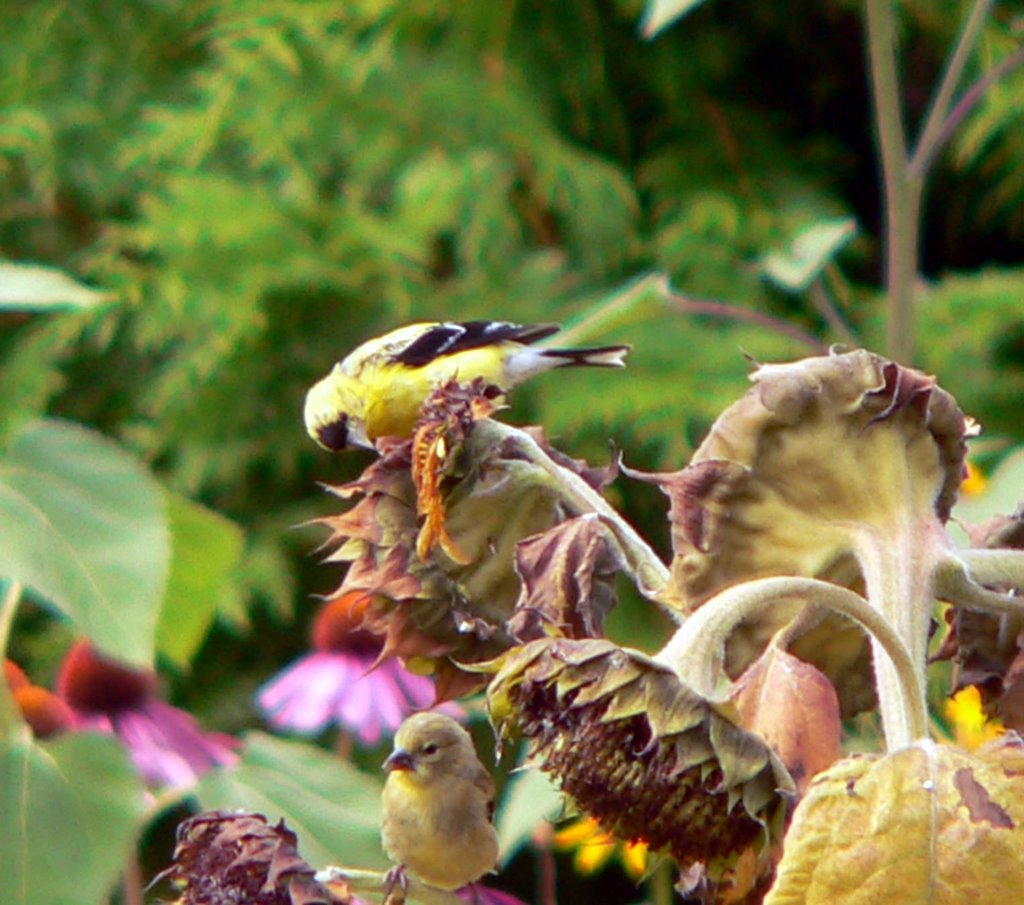
we have a plethora of goldfinches in our yard every morning. they are native to this area and are the washington state bird. they nest well into summer when thistles flower. they eat thistle seed and use the fluff for nest building. i have been trying to get a picture that shows the numbers of them, but they are small and won't hold still in a demonstrative bunch. they are flighty things and will take off in large, swirling flocks at some signal we can't perceive. sometimes a flock will zoom off erratically to the alders at the edge of our yard.

they also eat seed from the ground that has spilled out of the feeder, and peck around in the gravel for weed seeds.
i watch the birds while i do my morning reading from one or the other of the internets. i check my favorite blogs, leaving comments sometimes. i read the san francisco chronicle, a fifty year plus habit (damn, i am a geezer), starting with my small list of favorite comics. i read the santa cruz sentinel because i used to live there and like reading a small town paper. i read the two big seattle dailies and the weekly port townsend leader. i check the editorials, though i don't read them all, and i usually read the letters. lately i have been avoiding the big international stories in the papers because it's mostly old news to me, since the political blogs are timely to the latest minute. the news is also rather depressing, all the way from politics and war to the dead zone in the pacific ocean off the oregon coast and melting glaciers worldwide. the birds in the yard don't know the news, good or bad.

only a fraction of the goldfinches in the yard can eat at the same time. good thing some are bathing.
they also eat seed from the ground that has spilled out of the feeder, and peck around in the gravel for weed seeds.i watch the birds while i do my morning reading from one or the other of the internets. i check my favorite blogs, leaving comments sometimes. i read the san francisco chronicle, a fifty year plus habit (damn, i am a geezer), starting with my small list of favorite comics. i read the santa cruz sentinel because i used to live there and like reading a small town paper. i read the two big seattle dailies and the weekly port townsend leader. i check the editorials, though i don't read them all, and i usually read the letters. lately i have been avoiding the big international stories in the papers because it's mostly old news to me, since the political blogs are timely to the latest minute. the news is also rather depressing, all the way from politics and war to the dead zone in the pacific ocean off the oregon coast and melting glaciers worldwide. the birds in the yard don't know the news, good or bad.
posted by roger, who hasn't yet worked out this name change thingie.
Wednesday, August 16, 2006
Gone
Roger has started volunteering at the local Habitat for Humanity. He's doing their books. It's fairly complicated stuff-- they have a large second hand furniture store, and they carry the mortgages on the houses they've built here. And there are all those non-profit rules on record keeping. So, he's been concentrating on that. I'm sure he'll do a post on it eventually. He was planning on doing some kind of post for today, but he's been busy with spreadsheets and Quickbooks. I am filling in. I don't have much to say. So, I'm just going to post a poem I found a while back that I was very moved by. The first time I read it out loud to Roger I found I couldn't read it all the way through without crying.
The Animals Are Leaving
by Charles Harper Webb
One by one, like guests at a late party,
They shake our hands and step into the dark:
Arabian ostrich; Long-eared kit fox; Mysterious starling.
One by one, like sheep counted to close our eyes,
They leap the fence and disappear into the woods:
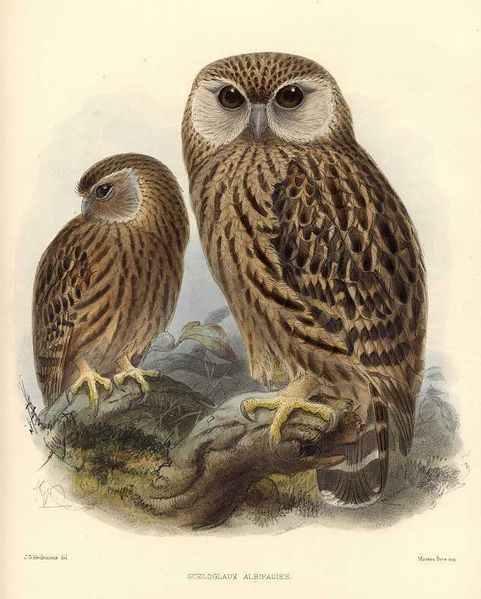
Atlas bear; Passenger pigeon; North Island laughing owl;
Great auk; Dodo; Eastern wapiti; Badlands bighorn sheep.
One by one, like grade school friends,
They move away and fade out of our memory:
Portuguese ibex; Blue buck; Auroch; Oregon bison;
Spanish imperial eagle; Japanese wolf; Hawksbill
Sea turtle; Cape lion; Heath hen; Raiatea thrush.
One by one, like children at a fire drill, they march outside,
And keep marching, though teachers cry, "Come back!"
Waved albatross; White-bearded spider monkey;
Pygmy chimpanzee; Australian night parrot;
Turquoise parakeet; Indian cheetah; Korean tiger;
Eastern harbor seal; Ceylon elephant; Great Indian rhinoceros.
One by one, like actors after a play that ran for years
And wowed the world, they link their hands and bow
Before the curtain falls.
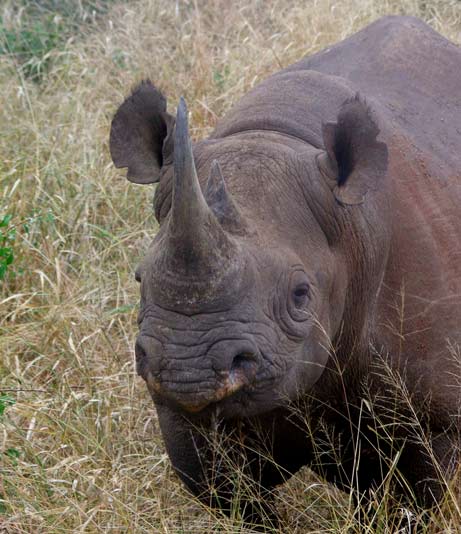
We just learned that the Black Rhinoceros may have gone extinct. Quite recently. The report was in July National Geographic. We say their names out loud and wave good bye. Good bye.
The Animals Are Leaving
by Charles Harper Webb
One by one, like guests at a late party,
They shake our hands and step into the dark:
Arabian ostrich; Long-eared kit fox; Mysterious starling.
One by one, like sheep counted to close our eyes,
They leap the fence and disappear into the woods:
Atlas bear; Passenger pigeon; North Island laughing owl;
Great auk; Dodo; Eastern wapiti; Badlands bighorn sheep.
One by one, like grade school friends,
They move away and fade out of our memory:
Portuguese ibex; Blue buck; Auroch; Oregon bison;
Spanish imperial eagle; Japanese wolf; Hawksbill
Sea turtle; Cape lion; Heath hen; Raiatea thrush.
One by one, like children at a fire drill, they march outside,
And keep marching, though teachers cry, "Come back!"
Waved albatross; White-bearded spider monkey;
Pygmy chimpanzee; Australian night parrot;
Turquoise parakeet; Indian cheetah; Korean tiger;
Eastern harbor seal; Ceylon elephant; Great Indian rhinoceros.
One by one, like actors after a play that ran for years
And wowed the world, they link their hands and bow
Before the curtain falls.
We just learned that the Black Rhinoceros may have gone extinct. Quite recently. The report was in July National Geographic. We say their names out loud and wave good bye. Good bye.
Tuesday, August 15, 2006
Self Conscious
Roger and I are the only people who walk our little road to the mailboxes. Everyone else either gets into their cars for the at-most half mile to retrieve it, or stops while driving to or from town. I tell you this because our walking makes us very visible. People begin to feel like they know us because they recognize us, but we are at a distinct disadvantage. We don't know them, and we don't recognize their cars. A woman stopped me the other day. She was driving up the road, I was on my way down to get the mail. She said, "Hey, I almost ran into you at Walmart this morning." I said, "That's impossible, I've never been in a Walmart store." She said, "Oh, I could have sworn it was you." Interesting. I would have sworn I'd never seen this woman before in my life. Yet, she recognizes me and imagines seeing me at Walmart.
One day, while we were walking along one of our favorite trails, we ran into an older couple. The woman said so warmly to us, "Hello." I smiled and said hello. She said, "We're your neighbors." I looked at her and thought she looked vaguely familiar, her husband more so. She said, "We see you walking to the mailboxes. I'd recognize your hair anywhere." Oh maybe that's it, my hair. I have long gray hair. Most older women don't do that. It's very witchy.
On Monday, a woman stopped her SUV on the road to talk to me. She smiled and said, "Hi, did I tell you we're building a house." I looked at her. She seemed a pleasant middle-aged woman. Her arms were still full of the mail she had just picked up. On the seat next to her were a receipt from the local hardware store and a half-dozen peach colored gladiolas. The flowers matched the color of her blouse, which had the smallest barely perceptible white polka dots. I looked at her and wondered if I had ever seen her before. I thought I must have. But then I immediately wondered why she was telling me about building a house. Is she new to the neighborhood? So I asked all the neighborly questions and learned that she is building a house nearby for her 24-year-old son who is still living at home. She laughs and says, "It's the only way to get him out of the house." I laugh too. We're having a neighborly conversation in the middle of the gravel road by our house. I have no idea who she is.
Roger and I often feel anonymous out here in the country, but our neighbors remind us that we have become familiar fixtures. I suspect we're like this heron, one among many, yet recognizable for the downy feather in our teeth.
One day, while we were walking along one of our favorite trails, we ran into an older couple. The woman said so warmly to us, "Hello." I smiled and said hello. She said, "We're your neighbors." I looked at her and thought she looked vaguely familiar, her husband more so. She said, "We see you walking to the mailboxes. I'd recognize your hair anywhere." Oh maybe that's it, my hair. I have long gray hair. Most older women don't do that. It's very witchy.
On Monday, a woman stopped her SUV on the road to talk to me. She smiled and said, "Hi, did I tell you we're building a house." I looked at her. She seemed a pleasant middle-aged woman. Her arms were still full of the mail she had just picked up. On the seat next to her were a receipt from the local hardware store and a half-dozen peach colored gladiolas. The flowers matched the color of her blouse, which had the smallest barely perceptible white polka dots. I looked at her and wondered if I had ever seen her before. I thought I must have. But then I immediately wondered why she was telling me about building a house. Is she new to the neighborhood? So I asked all the neighborly questions and learned that she is building a house nearby for her 24-year-old son who is still living at home. She laughs and says, "It's the only way to get him out of the house." I laugh too. We're having a neighborly conversation in the middle of the gravel road by our house. I have no idea who she is.
Roger and I often feel anonymous out here in the country, but our neighbors remind us that we have become familiar fixtures. I suspect we're like this heron, one among many, yet recognizable for the downy feather in our teeth.
Monday, August 14, 2006
grape expectations
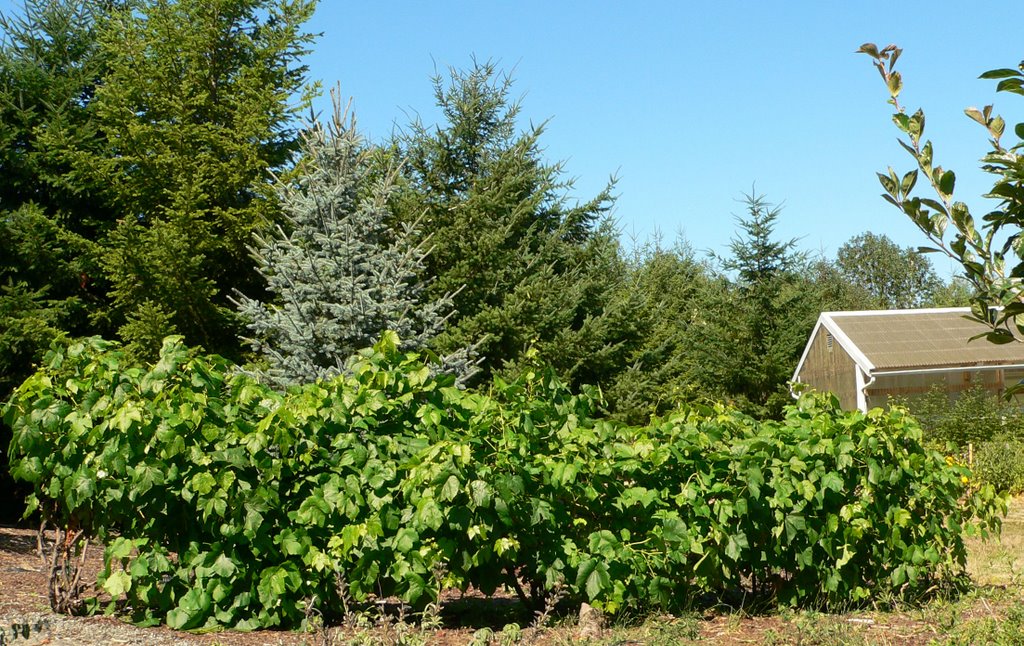
we first saw what was to become our new home in march, 2004. among the attractive outdoor amenities was a line of four grape vines supported by wires between steel fence posts, in a standard sort of arrangement. the vines looked vigorous, but the owners told us that the deer always ate most of the grapes. we moved here at the end of june, 2004. the deer ate not only all the grapes, but all the foliage as well. we fenced the yard in the early spring of 2005. we let the vines grow however they wanted that year. no pruning. they grew a lot of foliage but hardly any grapes. we pruned early this year, trying to tame the unruly mass of vines. we kept the large vines and left two buds on each spur.
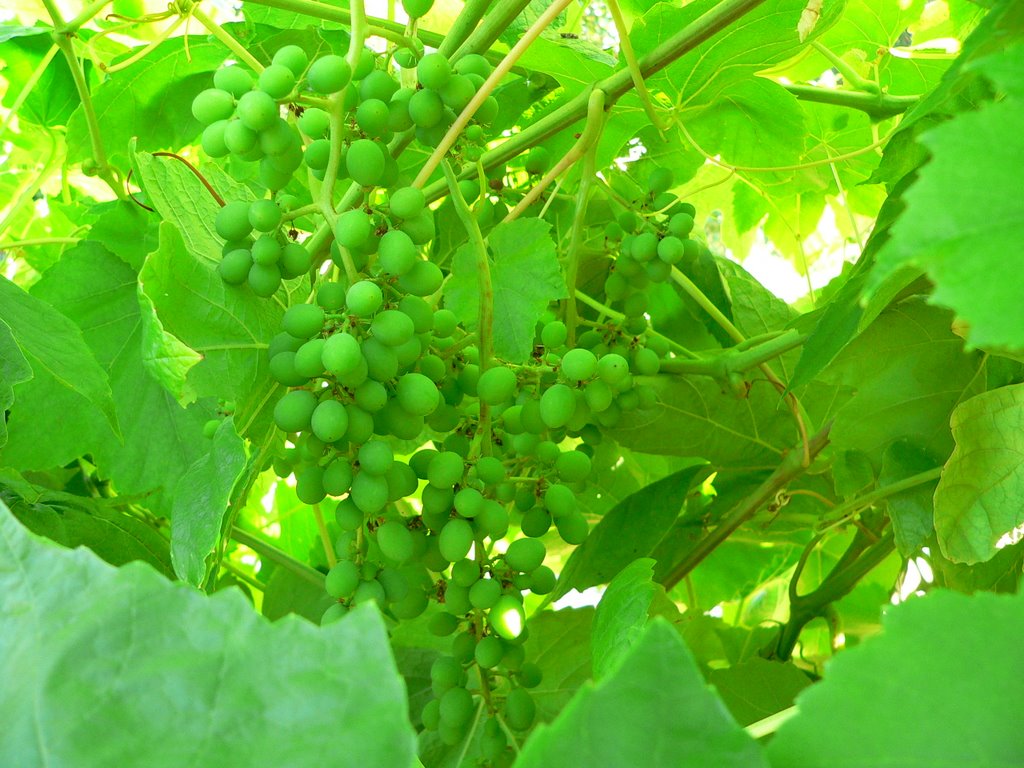
this year's growth looks great. the row is a bit over twenty feet long. there are four plants with multiple vines growing out of each. we noticed early that there were lots of grapes forming.
grapes are in the family vitaceae. we don't know what sort of grapes we have. we think they are green when ripe, as we got one (1) or two (2) grapes to eat last year, and they were green and seemed ripe. wikipedia lists 24 species. science may be saying that red wine is a positive health ingredient. well, we knew that! more science. most grapes grown are used to produce wine, which figures in politics. and then of course there is the famous latin adage "in vino veritas" which translates roughly as "in wine, truth," or, inebriated humans tend to blurt out their secret inner thoughts (think mel gibson as a recent example). i found out years ago that i am a maudlin drunk, professing love for everyone. it has been years since my vino has evoked that much veritas.
this year's growth looks great. the row is a bit over twenty feet long. there are four plants with multiple vines growing out of each. we noticed early that there were lots of grapes forming.grapes are in the family vitaceae. we don't know what sort of grapes we have. we think they are green when ripe, as we got one (1) or two (2) grapes to eat last year, and they were green and seemed ripe. wikipedia lists 24 species. science may be saying that red wine is a positive health ingredient. well, we knew that! more science. most grapes grown are used to produce wine, which figures in politics. and then of course there is the famous latin adage "in vino veritas" which translates roughly as "in wine, truth," or, inebriated humans tend to blurt out their secret inner thoughts (think mel gibson as a recent example). i found out years ago that i am a maudlin drunk, professing love for everyone. it has been years since my vino has evoked that much veritas.
Friday, August 11, 2006
Threat Test
My 80 year-old mother rarely travels by air, but on Thursday she was flying back to California from Virginia, where she had gone to visit my older brother. When I woke Thursday morning and heard the news of terrorist plots against airplanes, I was shocked and dismayed.
Before my mother flew from California last week to start her journey I had a serious talk with her. I said, "If your plane is being hijacked don't look terrorists in the eyes, don't try to make conversation, answer questions with your eyes averted, and don't tell anyone that you are Jewish. If you are wearing a Chai, or Star of David, take it off before you fly. Only be heroic and take chances if you feel that you must, that would be okay." I actually said those words to my mother.
I obviously didn't perceive the dangers correctly. On Thursday the TSA took my mother's toothpaste, shampoo, deororant, body wash, lotion, and moisturizer, but let her keep her eye medication.
Our country is absolutely insane if they don't know how to discern an actual threat.
It's Friday. Be careful, be safe, and have a great weekend. See you Monday.
Before my mother flew from California last week to start her journey I had a serious talk with her. I said, "If your plane is being hijacked don't look terrorists in the eyes, don't try to make conversation, answer questions with your eyes averted, and don't tell anyone that you are Jewish. If you are wearing a Chai, or Star of David, take it off before you fly. Only be heroic and take chances if you feel that you must, that would be okay." I actually said those words to my mother.
I obviously didn't perceive the dangers correctly. On Thursday the TSA took my mother's toothpaste, shampoo, deororant, body wash, lotion, and moisturizer, but let her keep her eye medication.
Our country is absolutely insane if they don't know how to discern an actual threat.
It's Friday. Be careful, be safe, and have a great weekend. See you Monday.
Thursday, August 10, 2006
What We've Learned So Far This Summer
This is going to be a short post!
We always thought that all birds nested in spring. In fact, we never thought much about it. It was one of those unarticulated assumptions about life. Then we moved to the country and learned that some birds produce more than one clutch in a season. Some birds nest quite late in summer. A voracious flock of American Goldfinch have descended on our bird feeder over the past few days. They're nesting now when thistle has gone to seed.
These Dark-eyed Junco babies were born at the end of July. Our neighbor called (the one who always alerts us to the most wonderful wildlife happening outside her windows!) and said, "Come over and bring your camera." She met me by a small juniper tree on our property boundary, and spread the tree limbs to show me this:
We learned that even the smallest babies can make it. When I looked closely at the photo I realized that there were four babies in the nest, and not three. I could not imagine that little one on the left would survive. It was so small. Its mouth was hardly noticeable compared to its sibling's. I wondered how a mother would pay attention to such a small and wizened thing.
Yet there they were a week later, all four of them. I went over and looked in on them. They stared back at me like I was a giant alien. They did not register alarm, but mere curiosity at this monstrosity staring in at them. I checked in on them on yesterday. The nest was empty.
My twin brother has a pair of nesting doves in a hanging potted plant on his porch. He watches them from his living room window. He called me the other day to say that he thought too much time had passed, that neither of the two eggs in the nest would hatch. He asked me to check when he had sent us the first email about the eggs, so we could calculate how much time had elapsed. Was it really too late? It certainly seemed to be.
But it wasn't too late for this one. This beautiful baby dove hatched not long after our commiserating conversation. It obviously had not read all the books about when it should arrive.
There's really a lot to learn, isn't there? We like leaving it up to these little ones to teach us. (Click on all the photos to see these babies. They're very cute.)
We always thought that all birds nested in spring. In fact, we never thought much about it. It was one of those unarticulated assumptions about life. Then we moved to the country and learned that some birds produce more than one clutch in a season. Some birds nest quite late in summer. A voracious flock of American Goldfinch have descended on our bird feeder over the past few days. They're nesting now when thistle has gone to seed.
These Dark-eyed Junco babies were born at the end of July. Our neighbor called (the one who always alerts us to the most wonderful wildlife happening outside her windows!) and said, "Come over and bring your camera." She met me by a small juniper tree on our property boundary, and spread the tree limbs to show me this:
We learned that even the smallest babies can make it. When I looked closely at the photo I realized that there were four babies in the nest, and not three. I could not imagine that little one on the left would survive. It was so small. Its mouth was hardly noticeable compared to its sibling's. I wondered how a mother would pay attention to such a small and wizened thing.
Yet there they were a week later, all four of them. I went over and looked in on them. They stared back at me like I was a giant alien. They did not register alarm, but mere curiosity at this monstrosity staring in at them. I checked in on them on yesterday. The nest was empty.
My twin brother has a pair of nesting doves in a hanging potted plant on his porch. He watches them from his living room window. He called me the other day to say that he thought too much time had passed, that neither of the two eggs in the nest would hatch. He asked me to check when he had sent us the first email about the eggs, so we could calculate how much time had elapsed. Was it really too late? It certainly seemed to be.
But it wasn't too late for this one. This beautiful baby dove hatched not long after our commiserating conversation. It obviously had not read all the books about when it should arrive.There's really a lot to learn, isn't there? We like leaving it up to these little ones to teach us. (Click on all the photos to see these babies. They're very cute.)
Subscribe to:
Posts (Atom)